

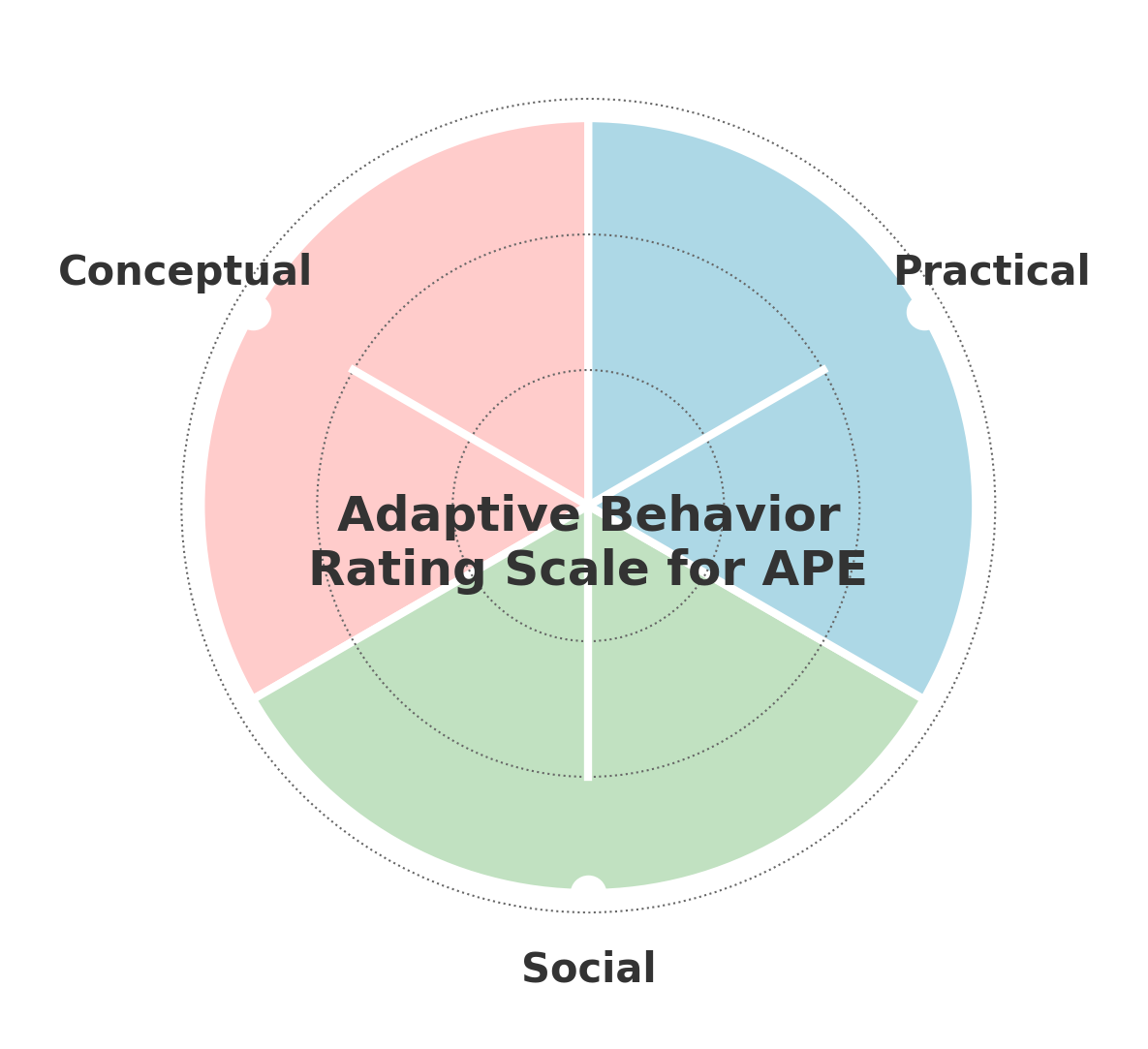
This Adaptive Behavior Rating Scale for APE (Barker, 2026) is designed as an informal evaluation to assist educators, adapted physical education (APE) specialists, and other professionals in observing and assessing students’ adaptive behavior skills in a physical education setting.
Purpose & Use
- This tool is not peer-reviewed or an official standardized assessment but serves as a structured way to gather insights about a student’s conceptual, social, and practical skills related to participation in PE.
- It helps identify areas where a student may need additional support or modifications in an APE program.
- The scoring system allows for a quantitative reflection of student performance across different skill areas.
Key Features
✅ Categorized Observations – Covers Conceptual Skills, Social Skills, and Practical Skills for a holistic view of adaptive behavior.
✅ Exclusive Selection Scoring – Users can select only one response per row to maintain clarity in evaluation.
✅ Auto-Scoring – Calculates a total score for quick reference.
✅ Report Generator – Generates a detailed report based on selected scores, providing customizable statements for teachers to adapt as needed.
Important Considerations
⚠ Not a diagnostic tool – This should be used as a supplemental observational guide rather than a formal eligibility measure for APE services.
⚠ Subjective interpretation – Results should be interpreted within the context of other educational assessments, teacher observations, and student IEP goals.
⚠ Supports decision-making – The tool helps inform possible placement decisions, adaptations and modifications in physical education to better support students with disabilities.
Adaptive Behavior Rating Scale for Adapted Physical Education (APE)
The Adaptive Behavior Rating Scale for APE is a tool designed to assess a student’s ability to function independently in physical education settings. It evaluates three domains—conceptual skills, social skills, and practical skills—each scored from 0 to 32. The combined total is normalized to a 0–100 scale. Higher scores indicate greater independence, while lower scores indicate a need for additional support.
Conceptual Skills
| Skill Description | 1 (Direct Support) | 2 (Consistent Prompting) | 3 (Some Prompting) | 4 (Independent) |
|---|---|---|---|---|
| Understands and follows verbal instructions | ||||
| Understands and follows visual instructions | ||||
| Recognizes safety rules in PE class | ||||
| Demonstrates problem-solving during activities | ||||
| Can sequence multiple steps in an activity | ||||
| Understands personal and shared space | ||||
| Can identify equipment by name and function | ||||
| Recognizes and adapts to rule modifications for different activities |
Social Skills
| Skill Description | 1 (Direct Support) | 2 (Consistent Prompting) | 3 (Some Prompting) | 4 (Independent) |
|---|---|---|---|---|
| Interacts appropriately with peers | ||||
| Demonstrates good sportsmanship | ||||
| Understands and follows turn-taking rules | ||||
| Engages in cooperative play | ||||
| Accepts winning and losing appropriately | ||||
| Respects personal boundaries of others | ||||
| Responds appropriately to praise or correction | ||||
| Initiates and maintains conversations with peers |
Practical Skills
| Skill Description | 1 (Direct Support) | 2 (Consistent Prompting) | 3 (Some Prompting) | 4 (Independent) |
|---|---|---|---|---|
| Independently follows classroom routines | ||||
| Can transition between activities smoothly | ||||
| Demonstrates self-care skills (e.g., managing clothing/shoes for activities) | ||||
| Handles equipment safely and appropriately | ||||
| Demonstrates awareness of personal limits and fatigue | ||||
| Requests help when needed | ||||
| Engages in appropriate physical exertion for fitness level | ||||
| Can follow modified or adapted instructions when necessary |
Conceptual
Score: 0 / 32
Interpretation: N/A
Practical
Score: 0 / 32
Interpretation: N/A
Overall ABR
Score: 0 / 100
Interpretation: N/A
Overall Score Interpretation
Category Interpretation
Graphs
Generate Narrative Report
Score Interpretation Table
| Score Range | Interpretation |
|---|---|
| 85-100 | Highly independent, strong adaptive skills |
| 50 – 74 | Developing adaptive skills, some support needed |
| 0 – 49 | Requires significant assistance |
Category Interpretations
| Category | High (25-32) | Moderate (13-24) | Low (0-12) |
|---|---|---|---|
| Conceptual Skills | Strong cognitive adaptability | Developing cognitive adaptability | Needs substantial cognitive support |
| Social Skills | Highly engaged and cooperative | Developing social interaction skills | Requires structured social support |
| Practical Skills | Highly independent in daily activities | Moderate independence with some assistance | Requires significant guidance |
Social
Score: 0 / 32
Interpretation: N/A