7 Simple Ways to Help Students Learn to Skip
General · By Matt Barker (Digit the APE), Adapted Physical Education specialist
Published · Updated
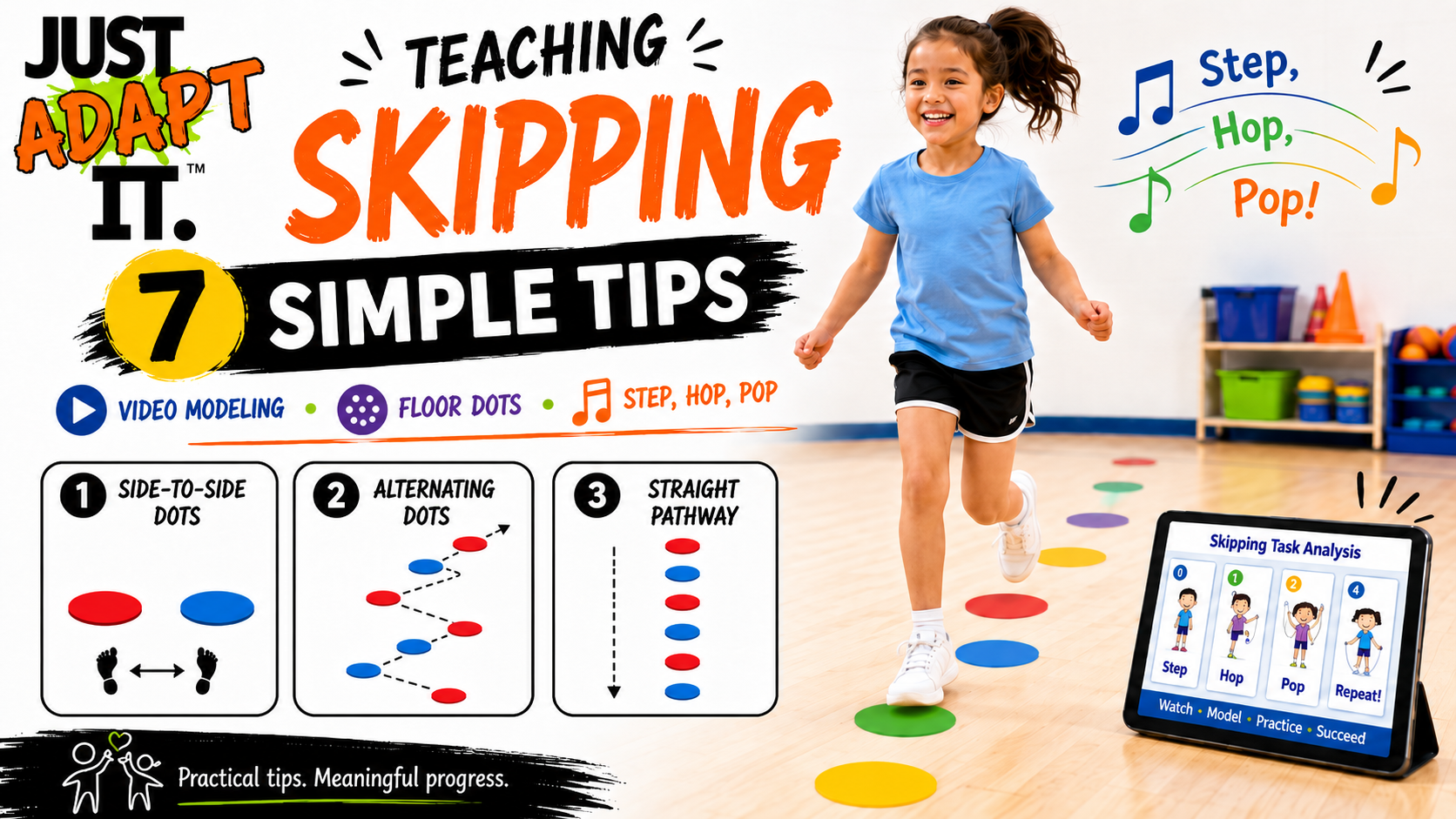
Skipping combines balance, hopping, coordination, and rhythm. Use floor dots, video modeling, music, and task analysis to help every student learn to skip.
Skipping looks simple, but it combines balance, single-leg hopping, coordination, weight shifting, motor planning, and rhythm. For some students, asking them to “just skip” is too much information at once.
This excellent activity from Core Kids Physical Therapy uses colored floor dots to make the movement pattern more visual and manageable.
Watch the Core Kids Activity
1. Teach the Rhythm First
Before asking students to travel across the gym, practice the rhythm:
Step. Hop. Step. Hop.
Clap it, chant it, tap it on a drum, or have students repeat it while marching. Learning the rhythm first can make the full movement much easier.
2. Use Floor Dots as Visual Targets
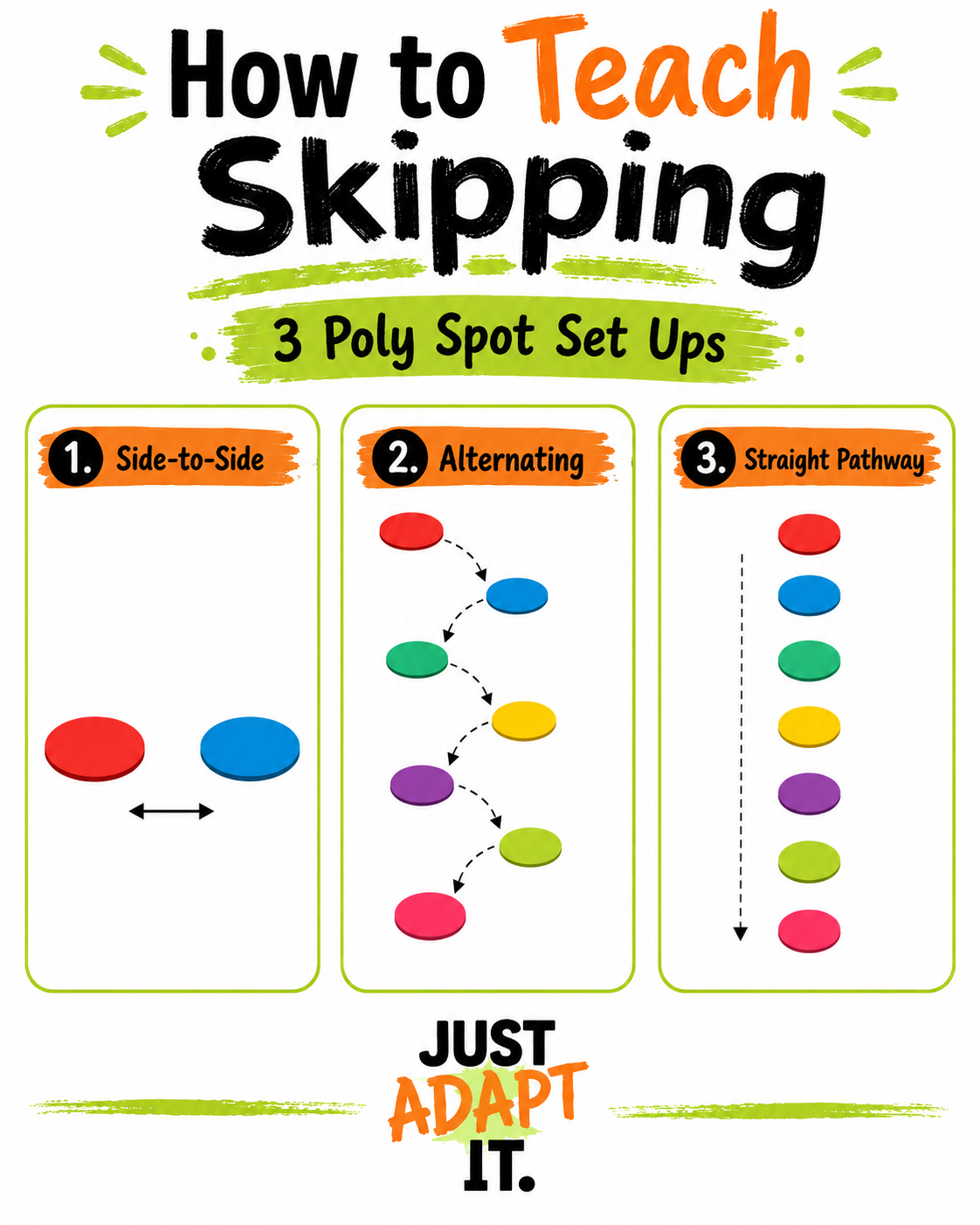
Floor dots show students exactly where to place their feet and reduce the motor-planning demands of moving through open space.
Begin with side-to-side dots, progress to a diagonal pattern, and then create a straight pathway for forward skipping.
3. Use Video Modeling
A live demonstration disappears quickly. A video model can be paused, replayed, and watched as many times as needed.
This MotionBoard video uses task analysis to clearly model the skipping sequence.
4. Keep Teaching Cues Short
Long explanations can overload students. Try one short cue and use it consistently:
- Step-hop
- Step-hop, switch
- Step, hop, pop
5. Add Music and Movement
Some students understand skipping more easily when they can hear and feel the rhythm. The Bo the Scarecrow “Step, Hop, Pop” video turns the movement sequence into a memorable follow-along song.
6. Practice the Building Blocks
A student may not be ready to combine the entire skill. Practice the individual components first:
- Single-leg balance
- Hopping on one foot
- Alternating feet
- Weight shifting
- Marching to a beat
- Step-hop without traveling
7. Gradually Remove the Supports
As students become more confident, spread the dots farther apart, remove some markers, reduce verbal prompts, pause the video, or practice without the music.
The goal is not to remove every support immediately. It is to fade supports as the student becomes ready for greater independence.
See It, Hear It, Practice It
The Core Kids activity provides a visual pathway. The MotionBoard task-analysis video shows the movement sequence. “Step, Hop, Pop” adds music, rhythm, and repetition.
Together, these strategies give students several ways to access the same skill: see it, hear it, practice it, and repeat it.
Credit to Core Kids Physical Therapy for sharing the original colored-dot skipping progression. The task-analysis and song-based video models were created using MotionBoard on JustAdaptIt.com.
Topics: Adapted PE, Skipping, Locomotor Skills, Task Analysis, MotionBoard